After the EV Battery

Declan Kennedy
| 26-05-2026
 · Vehicle Team
An electric vehicle battery doesn't become worthless the moment it can no longer meet driving performance requirements.
A degraded battery at 70–80% capacity won’t work well for a vehicle needing reliable range, but it can still be useful for less demanding energy storage applications.
This gap between end-of-vehicle-life and end-of-useful-life is the foundation of the entire battery second-life industry, and in 2026 it has become one of the more commercially active areas in the energy transition.
The International Energy Agency estimates that 100 to 120 gigawatt-hours of EV batteries will be retired by 2030 — a volume roughly equal to current annual battery production. McKinsey projects a global supply of around 15 GWh of second-life batteries in 2026, growing to between 112 and 227 GWh by 2030.
How the industry manages that wave of material will significantly affect both the economics of clean energy storage and the sustainability of EV production itself.
Second Life: Batteries That Keep Working
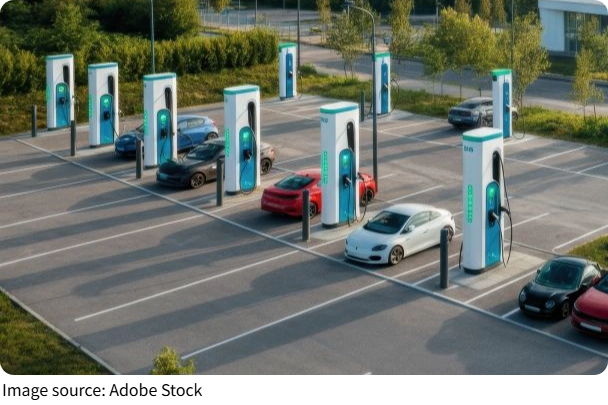
When a retired EV battery enters a second-life pathway, it is repurposed for stationary energy storage rather than being broken down immediately. Residential solar storage, commercial grid buffer systems, EV charging station backup, and large-scale grid integration are all established application categories.
Nissan pioneered this with their Leaf battery reuse program. Volkswagen deployed repurposed batteries at fast-charging stations. Redwood Materials launched a dedicated energy division specifically to deploy used batteries as grid-scale storage before eventually recycling them.
Before a battery pack can enter second-life service, it must be assessed and processed. This involves evaluating the state of health of individual cells, identifying which modules are viable, and either repurposing the pack as-is or refurbishing it — disassembling the pack, remanufacturing cells, and repackaging them into new modules.
This process is technically demanding and not yet fully automated, which contributes to cost and limits throughput. Research published in 2026 found that reusing end-of-life EV batteries in stationary storage before recycling is environmentally beneficial in the long term, reducing greenhouse gas emissions more than direct recycling alone.
By 2050, second-life batteries could satisfy more than 100% of stationary energy storage demand in markets like California, while recycling is expected to cover around 61% of EV battery material demand annually by that year.
Recycling: Recovering What's Inside
Battery recycling recovers the raw materials — lithium, cobalt, nickel, manganese — that can be reintroduced into new battery production. This matters enormously for supply chain security: EV battery production depends on materials that are geographically concentrated and subject to price volatility. Closing the material loop reduces both supply risk and the environmental footprint of battery manufacturing.
The EU Battery Regulation of 2023 sets mandatory recycled content requirements: by 2031, new battery packs must contain minimum percentages of recycled cobalt, lithium, and nickel. This regulatory push is accelerating investment in recycling infrastructure across Europe and North America.
Three main recycling processes are in use — pyrometallurgy, which uses high-temperature smelting; hydrometallurgy, which uses chemical solutions to dissolve and recover materials; and direct recycling, which attempts to recover cathode materials intact for reuse. Each has trade-offs in cost, efficiency, and material recovery quality.
The Challenges Still to Solve
Neither pathway is mature at the scale required. Assessment of battery state of health — determining exactly how much useful capacity remains in each cell — is technically complex and must be done efficiently at high volume for second-life economics to work. Standardization is another gap: battery pack designs vary significantly across manufacturers, making automated disassembly and reassessment difficult.
A battery designed for second-life from the start — with modular architecture, standardized connectors, and embedded health monitoring — would be far easier to process. The industry is moving in that direction, but most batteries currently entering retirement were not designed with this in mind.
The wave of retired EV batteries arriving by 2030 is both a challenge and an opportunity. Second-life storage can stabilize electricity grids and power homes for years before recycling. Recycling can supply a growing share of the lithium, cobalt, and nickel needed for new batteries. Neither pathway is fully mature, but both are accelerating.
The batteries driving today's EVs won't become waste when they leave the car. They'll become something else: grid backup, solar storage, or raw material for the next generation of clean transportation.